

Introduction to Tuna Club Avalon
If you have ever dreamed of stepping into a place where history, ocean breeze, and tradition blend seamlessly, then the Tuna Club Avalon is exactly the kind of destination that sparks curiosity. Nestled in the picturesque town of Avalon on Santa Catalina Island, this iconic club is far more than just a building. It is a living story that captures the spirit of early California coastal life.
You might be wondering what makes a private club so famous. The answer lies in its deep-rooted connection to sport fishing, its distinctive architectural design, and its long-standing cultural significance. Established in the late 19th century, the Tuna Club has played a pivotal role in shaping big-game fishing as we know it today.
Whether you are a history enthusiast, an architecture lover, or someone who simply enjoys coastal vibes, this place has something special to offer. Let’s take a closer look at what makes Tuna Club Avalon such a fascinating landmark.
The Origins of Tuna Club Avalon
Birth of a Fishing Legacy
The Tuna Club of Avalon was founded in 1898, making it one of the oldest sport fishing clubs in the world. At a time when recreational fishing was still evolving, this club set standards that would influence anglers globally.
Back then, the waters around Catalina Island were teeming with marine life, especially tuna. Wealthy anglers and adventurers were drawn to Avalon, eager to test their skills against powerful fish. The club quickly became a hub for these pioneers, establishing rules and ethics that emphasized fair play in fishing.
Pioneering Big Game Fishing
One of the most remarkable contributions of the Tuna Club was promoting the use of light tackle fishing. Instead of relying on heavy gear, members were encouraged to rely on skill and technique. This approach revolutionized sport fishing and made the experience more challenging and rewarding.
It is fascinating to think that many modern fishing practices trace their roots back to this very place. The Tuna Club did not just follow trends. It created them.
Architectural Beauty of the Tuna Club
A Unique Waterfront Structure
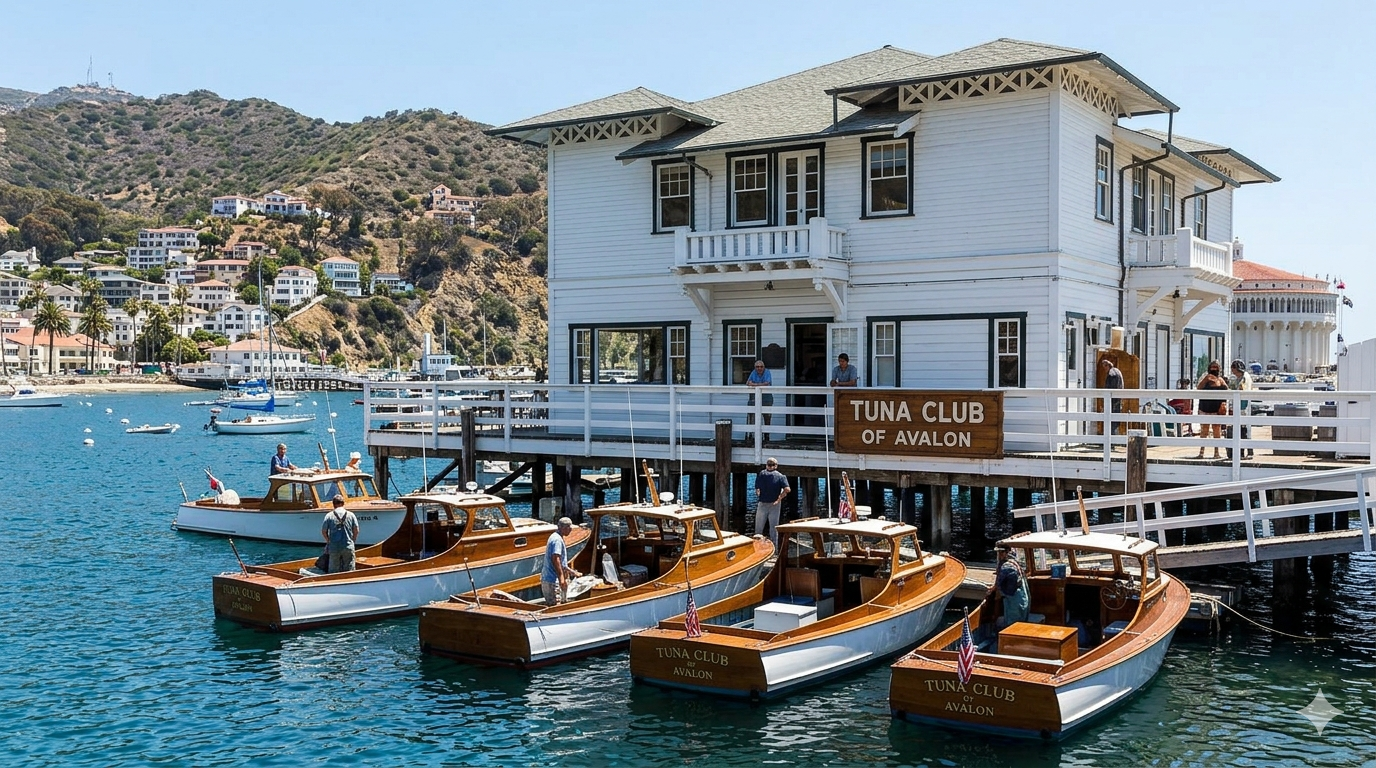
The Tuna Club building itself is a masterpiece of coastal architecture. Designed in a rustic yet elegant style, it sits gracefully on stilts above the water, offering breathtaking views of the harbor.
Its design reflects simplicity and functionality while still maintaining a sense of charm. The wooden structure blends naturally with its surroundings, making it feel like an organic part of the coastline.
Interior That Tells Stories
Step inside, and you are immediately surrounded by history. The walls are adorned with trophies, photographs, and memorabilia that date back over a century. Each item tells a story of adventure, competition, and camaraderie.
It feels less like a building and more like a time capsule. You can almost imagine the early anglers sharing their stories after a long day at sea, their voices echoing through the wooden halls.
Location and Scenic Appeal
The Charm of Avalon Harbor
The Tuna Club is perfectly positioned in Avalon Harbor, one of the most beautiful spots on Catalina Island. The calm waters, colorful boats, and surrounding hills create a postcard-worthy setting.
Being in Avalon means you are surrounded by natural beauty at every turn. The island itself is known for its clear waters, diverse marine life, and relaxed atmosphere.
A Destination Worth Visiting
Even if you are not a member of the club, the area around it is worth exploring. Visitors often stroll along the waterfront, taking in the views and snapping photos of this historic structure.
The combination of ocean air, sunshine, and history creates an experience that feels both relaxing and inspiring.
Cultural and Historical Significance
Recognized Historic Landmark
The Tuna Club of Avalon is not just a local treasure. It is recognized as a California Historical Landmark, highlighting its importance in the state’s history.
This recognition ensures that the building and its legacy are preserved for future generations. It is a reminder of how a simple idea can evolve into something truly impactful.
Influence Beyond Fishing
While its primary focus has always been fishing, the club’s influence extends beyond that. It has played a role in shaping social culture, tourism, and even conservation efforts in the region.
By promoting responsible fishing practices, the Tuna Club helped raise awareness about preserving marine ecosystems long before it became a global concern.
Membership and Exclusivity
A Private Yet Prestigious Club
The Tuna Club remains a private institution, which adds to its mystique. Membership is limited and often passed down through generations, creating a sense of tradition and continuity.
This exclusivity does not make it unwelcoming. Instead, it preserves the club’s heritage and ensures that its values remain intact.
A Community of Passionate Anglers
Members of the Tuna Club share a deep passion for the ocean and fishing. It is not just about competition. It is about respect for the sport and the environment.
This sense of community is one of the reasons the club has endured for so long. It brings together people who share common interests and values.
Modern-Day Relevance
Blending Tradition with Today’s World
In a fast-paced, technology-driven world, the Tuna Club stands as a symbol of tradition. Yet, it has managed to stay relevant by adapting without losing its essence.
Modern anglers still look to the club for inspiration, and its legacy continues to influence fishing practices around the world.
Tourism and Local Economy
The presence of the Tuna Club adds significant value to Avalon’s tourism industry. Visitors are drawn to its history and unique appearance, making it a popular subject for photographs and stories.
It contributes to the island’s identity, helping Avalon stand out as more than just a beach destination.
Comparison: Then and Now
| Feature | Early Days (1898) | Today |
|---|---|---|
| Purpose | Sport fishing hub | Historic private club |
| Fishing Style | Light tackle innovation | Preserved tradition |
| Membership | Elite anglers | Exclusive legacy members |
| Structure | Newly built wooden design | Carefully preserved landmark |
| Influence | Regional | Global recognition |
This comparison shows how the Tuna Club has evolved while staying true to its roots.
Why Tuna Club Avalon Still Captivates Visitors
There is something undeniably magical about places that carry history in every detail. The Tuna Club Avalon is one of those rare gems. It is not flashy or modern in the conventional sense, yet it leaves a lasting impression.
Perhaps it is the stories embedded in its walls. Or maybe it is the way it connects people to a simpler time. Whatever the reason, it continues to capture the imagination of those who encounter it.
You do not have to be a fishing enthusiast to appreciate its charm. Sometimes, just standing nearby and taking in the view is enough to understand its significance.
Conclusion
The Tuna Club Avalon is more than just a historic building on Catalina Island. It is a symbol of innovation, tradition, and community. From its role in shaping sport fishing to its enduring architectural charm, it represents a unique chapter in California’s coastal history.
In a world that often prioritizes the new, the Tuna Club reminds us of the value of preserving the past. It shows how history can remain relevant, inspiring, and deeply meaningful.
If you ever find yourself in Avalon, take a moment to appreciate this iconic landmark. You might just find yourself transported to another time.
FAQs
1. What is Tuna Club Avalon known for?
It is known for being one of the oldest sport fishing clubs in the world and for pioneering light tackle fishing techniques.
2. Where is the Tuna Club located?
It is located in Avalon on Santa Catalina Island, California.
3. Can the public visit the Tuna Club?
The club itself is private, but visitors can view it from the outside and explore the surrounding waterfront.
4. When was the Tuna Club founded?
It was established in 1898.
5. Why is the Tuna Club historically important?
It played a major role in developing modern sport fishing practices and is recognized as a California Historical Landmark.
