

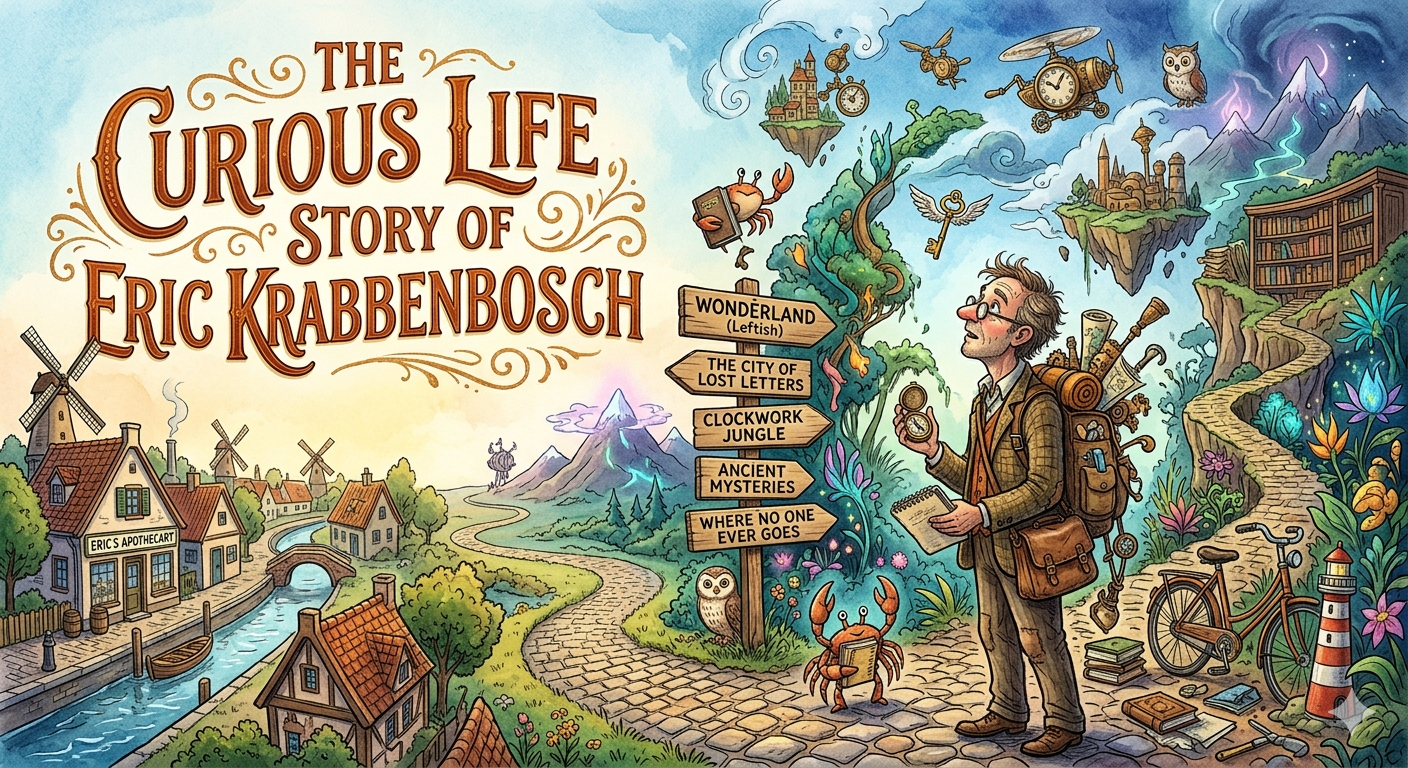
The Curious Life Story of Eric Krabbenbosch: From Chaos to Creativity
Some life stories feel almost too intense to be real, shaped by rebellion, addiction, survival, and ultimately redemption. The curious life story of Eric Krabbenbosch is one of those rare journeys. Born in the Netherlands and later known for his underground comic art, Krabbenbosch lived through social revolutions, drug epidemics, personal collapse, and creative rebirth. His life reflects not only personal struggle but also a broader picture of Amsterdam’s shifting cultural landscape during the turbulent decades of the late twentieth century.
Eric Krabbenbosch was not simply an artist who observed society from the sidelines. He lived deep inside some of its darkest corners. From experimenting with drugs during the social unrest of the 1960s and 1970s to battling a decades-long heroin addiction, his experiences became both painful burdens and creative fuel. Yet what makes his story especially compelling is not just the chaos he endured, but the way he transformed it into art and social awareness.
His life stands as a testament to resilience. Instead of becoming only a cautionary tale, Krabbenbosch emerged as a storyteller whose work captured the realities of addiction, marginalization, and survival with raw honesty.
Early Life in a Time of Cultural Upheaval
Eric Krabbenbosch came of age during one of Europe’s most socially explosive periods. Amsterdam in the 1960s was a city alive with political protest, youth rebellion, counterculture movements, and experimental freedom. Students challenged institutions, underground scenes flourished, and mind-altering substances became part of a larger social revolution.
As a young man studying sociology, Krabbenbosch was pulled less toward conventional academic life and more toward the rapidly evolving underground world around him. Like many of his generation, curiosity drove him into experimentation. Hashish, LSD, and the broader counterculture lifestyle became central influences. What may have started as youthful rebellion gradually opened doors to more dangerous territory.
This period was critical because it shaped both his worldview and his vulnerabilities. Amsterdam’s vibrant freedom came with hidden costs, and for Eric, curiosity often blurred into self-destruction.
Descent Into Heroin Addiction
By the early 1970s, heroin entered Amsterdam’s streets with devastating force. Krabbenbosch’s own accounts describe how heroin initially seemed like relief, particularly after the psychological aftereffects of LSD. What began as experimentation quickly evolved into physical and psychological dependency.
His descent was not sudden but progressive, which is often how addiction works. One decision led to another, and before long, he found himself trapped in a cycle that would dominate much of his adult life. Over the next four decades, heroin and later cocaine became central struggles in his existence. He experienced failed attempts at recovery, withdrawal, relapses, and the brutal realities of addiction culture.
This was not merely personal suffering. Krabbenbosch witnessed the wider heroin epidemic that affected countless lives in Amsterdam. He saw communities transformed, friendships lost, and entire social spaces shaped by substance dependency. His survival alone was remarkable, especially during an era when many around him did not make it.
The HUK Era and Underground Amsterdam
One of the most fascinating chapters in Eric’s life was his connection to Amsterdam’s HUK scene, a now infamous user space associated with hard drug culture. This environment exposed him to the harsh realities of addiction while also providing firsthand insight into marginalized communities.
Krabbenbosch later translated these experiences into his creative work, especially through comics that depicted society’s fringes with authenticity that few outsiders could replicate. His artistic voice carried weight because it was not fabricated. He had lived through the chaos.
His observations from this era reveal an unusual contradiction. Even in deeply troubled environments, there were moments of humanity, humor, creativity, and strange camaraderie. This duality became a defining characteristic of his storytelling.
Art as Survival and Reinvention
After decades of addiction, Eric Krabbenbosch eventually broke free, reportedly using hard-earned personal strategies and gradual methadone management to escape dependency. This was not an overnight transformation or a miracle cure. It was a long, grueling process shaped by persistence.
What came next is what makes his story truly extraordinary. Rather than disappearing into obscurity, Krabbenbosch returned to art. He revived his passion for comics and illustration, using his lived experiences as creative material.
His work, including contributions to underground publications like Gramschap and later to harm reduction organization Mainline, gave voice to realities often ignored by mainstream society. Through comics like Bruno & Wiesje and his HUK-related illustrations, he documented addiction culture with honesty, wit, and compassion.
Art became more than expression. It became redemption.
Contribution to Harm Reduction and Social Awareness
Krabbenbosch’s later involvement with Mainline, an organization focused on improving health and quality of life for substance users, marked another profound evolution in his journey. Instead of only surviving addiction, he began contributing to public awareness and harm reduction efforts.
This shift matters deeply. Many people who overcome hardship choose privacy, which is understandable. Krabbenbosch instead transformed his past into advocacy. His illustrations helped educate and humanize people often dismissed by society.
This role positioned him as both artist and witness. He did not romanticize addiction, nor did he erase its humanity. His work acknowledged pain while encouraging practical support and understanding.
Why Eric Krabbenbosch’s Story Resonates
The curious life story of Eric Krabbenbosch resonates because it is layered. It is about addiction, but also creativity. It is about destruction, but also reinvention. His life reflects how human beings can fall deeply into darkness while still finding pathways back through art and purpose.
His journey also challenges stereotypes. Addiction did not erase his intelligence or creativity. Recovery did not erase his past. Instead, both became part of a larger narrative that informed his work and identity.
In many ways, Krabbenbosch’s story mirrors society’s own contradictions. Freedom can inspire and destroy. Curiosity can liberate and endanger. Art can emerge from pain.
Lessons From His Remarkable Journey
There are powerful lessons in Eric’s life:
- Curiosity without boundaries can carry risks
- Addiction is often gradual, not immediate
- Recovery can take years, even decades
- Creativity can become a tool for survival
- Personal pain can evolve into public contribution
These lessons make his story more than a biography. They make it a deeply human exploration of resilience.
Conclusion
The curious life story of Eric Krabbenbosch is not a polished tale of easy redemption. It is messy, intense, painful, and inspiring. From Amsterdam’s underground drug culture to the world of comics and advocacy, his journey reveals the complexity of survival.
Eric Krabbenbosch transformed personal chaos into creative testimony. His life reminds us that even after decades of struggle, reinvention remains possible. Through art, honesty, and perseverance, he became more than a survivor of addiction. He became a chronicler of a hidden world and proof that creativity can rise from even the darkest places.
