

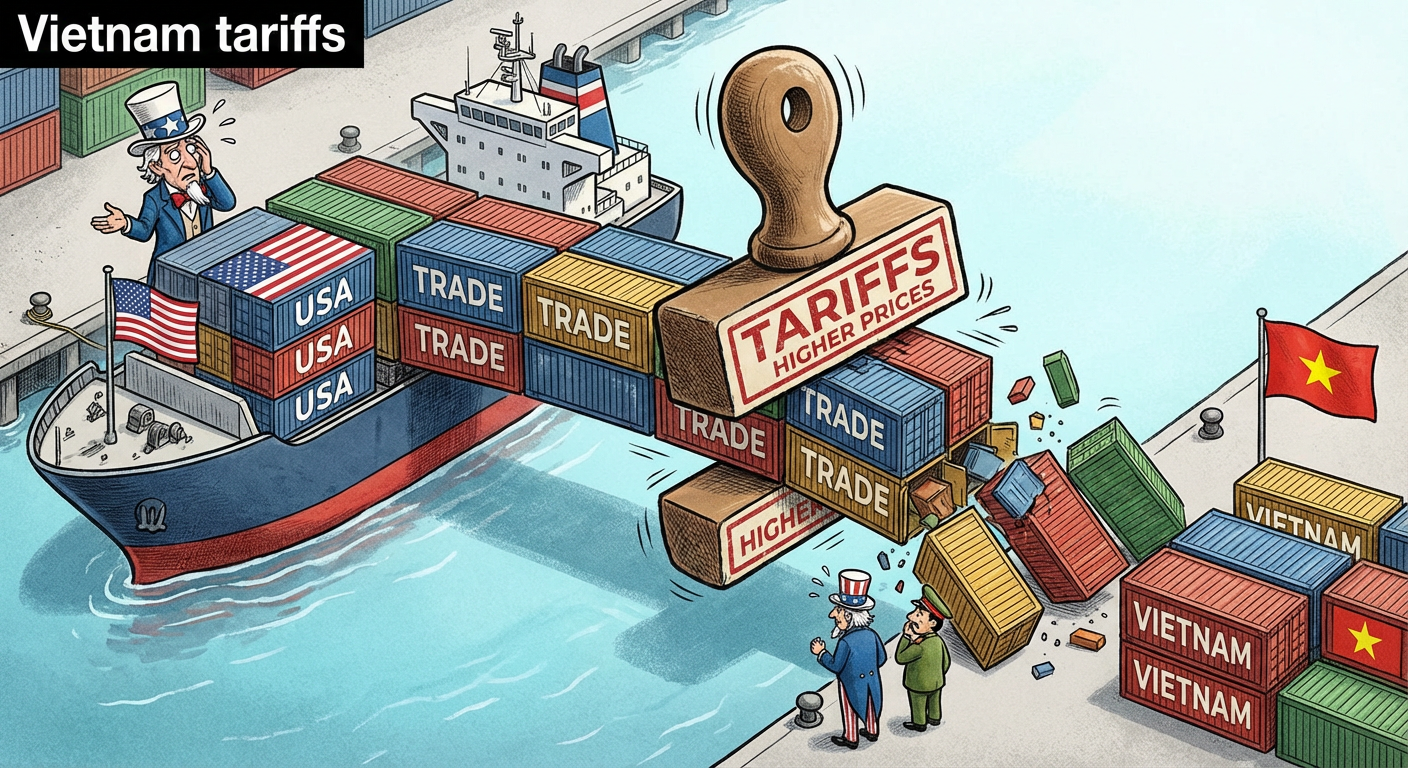
Vietnam has emerged as one of the most dynamic economies in Southeast Asia, transforming from a centrally planned system to a market-oriented powerhouse. Central to this transformation is Vietnam’s sophisticated trade policy, characterized by a complex yet strategic application of tariffs. As global corporations seek to diversify supply chains away from traditional hubs, understanding the nuances of Vietnam’s tariff structures, free trade agreements (FTAs), and regulatory environment has become essential for international business success.
The Architecture of Vietnam’s Tariff System
Vietnam’s tariff regime is primarily governed by the Law on Import and Export Duties. The system is designed to protect domestic industries while simultaneously encouraging the import of raw materials and advanced technologies necessary for industrialization. Tariffs in Vietnam are generally categorized into three distinct types:
- Ordinary Rates: These apply to goods originating from countries that do not have “Most Favored Nation” (MFN) status with Vietnam. These rates are typically 50% higher than MFN rates.
- MFN Rates: These apply to imports from member countries of the World Trade Organization (WTO). As a WTO member since 2007, Vietnam applies these rates to a vast majority of its global trading partners.
- Preferential Rates: These are the most significant for modern traders. These rates apply to goods originating from countries or territories that have signed bilateral or multilateral Free Trade Agreements with Vietnam. In many cases, preferential rates are reduced to 0%.
The Strategic Impact of Free Trade Agreements (FTAs)
Vietnam is currently a signatory to over 15 active FTAs, making it one of the most “open” economies in the world regarding trade liberalization. These agreements have drastically reduced tariff barriers, creating a competitive advantage for products manufactured within Vietnamese borders.
The CPTPP and EVFTA
The Comprehensive and Progressive Agreement for Trans-Pacific Partnership (CPTPP) and the European Union-Vietnam Free Trade Agreement (EVFTA) are two pillars of Vietnam’s modern trade strategy. The EVFTA, specifically, is a “new generation” agreement that aims to eliminate 99% of all tariffs between Vietnam and the EU over a ten-year transition period. For European businesses, this means cheaper access to Vietnamese electronics and textiles, while Vietnamese consumers gain easier access to European machinery and pharmaceuticals.
The RCEP Advantage
The Regional Comprehensive Economic Partnership (RCEP) connects Vietnam with the ASEAN bloc plus China, Japan, South Korea, Australia, and New Zealand. This agreement streamlines “rules of origin,” allowing materials sourced from any member country to count toward the value-added requirement for tariff-free export. This has turned Vietnam into a vital “final assembly” hub for complex Asian supply chains.
Import and Export Duty Specifics
While Vietnam is aggressive in lowering import duties to facilitate trade, it maintains specific export duties on a limited range of goods.
Import Duties: Most consumer goods, especially luxury items like automobiles, alcohol, and tobacco, still face high import tariffs to encourage domestic consumption of local goods and manage trade deficits. Conversely, machinery used for fixed assets in “encouraged” investment projects is often exempt from import duties entirely.
Export Duties: These are primarily levied on natural resources and raw materials, such as minerals, forest products, and scrap metal. The goal is to discourage the export of raw materials and instead promote high-value downstream processing within Vietnam. Rates typically range from 0% to 45%.
The “China Plus One” Strategy and Tariff Mitigation
The ongoing trade tensions between the United States and China have significantly impacted Vietnam’s tariff landscape. As the U.S. imposed Section 301 tariffs on Chinese-made goods, many manufacturers shifted production to Vietnam to utilize Vietnam’s favorable tariff status with the U.S. market.
However, this shift has brought increased scrutiny. Vietnam must navigate “anti-circumvention” investigations, where authorities check if goods are truly manufactured in Vietnam or simply “transshipped” from China with minimal processing to avoid tariffs. To mitigate these risks, businesses must ensure they meet the specific “Rules of Origin” (ROO) criteria, proving that a substantial transformation of the product occurred on Vietnamese soil.
Value Added Tax (VAT) and Special Consumption Tax (SCT)
Tariffs are not the only cost associated with moving goods across the Vietnamese border. Most imported goods are subject to a Value Added Tax (VAT), usually set at 10%, though certain essentials may be taxed at 5%.
Additionally, the Special Consumption Tax (SCT) applies to specific goods and services considered luxury or harmful to health. This includes items like passenger cars with fewer than 24 seats, airplanes, yachts, gasoline, and tobacco. When calculating the total “landed cost” of an import, the SCT is applied to the sum of the import price plus the import duty, creating a compounding effect that significantly raises the final price of luxury imports.
Customs Valuation and Compliance
Vietnam adheres to the WTO Valuation Agreement, meaning the customs value is generally based on the transaction value (the price actually paid). However, the General Department of Vietnam Customs maintains a database of “reference prices.” If a declared price is significantly lower than the reference price, authorities may challenge the valuation, leading to delays and potential penalties.
Proper documentation is the bedrock of tariff compliance in Vietnam. This includes:
- Commercial Invoice
- Bill of Lading
- Certificate of Origin (Form D, E, EUR.1, etc., depending on the FTA)
- Import/Export Permit (for restricted goods)
- Technical health/quality certificates
Future Outlook: Digitalization and Green Trade
The future of Vietnam’s tariff regime is leaning toward digitalization and sustainability. The Vietnam Automated Cargo and Port Consolidated System (VNACCS/VCIS) has already streamlined the declaration process, reducing the time required for customs clearance.
Furthermore, as global markets move toward “Green Tariffs” or Carbon Border Adjustment Mechanisms (CBAM), Vietnam is under pressure to align its domestic production with environmental standards. Future trade agreements and tariff preferences may soon be tied to the carbon footprint of the manufacturing process, forcing Vietnamese industries to pivot toward renewable energy and sustainable practices to maintain their tariff-free access to Western markets.
Conclusion
Vietnam’s tariff system is a powerful tool of economic policy that balances protectionism with aggressive global integration. For international businesses, the key to success lies in leveraging the country’s extensive network of Free Trade Agreements while maintaining rigorous compliance with rules of origin and customs valuation. As Vietnam continues to solidify its role as a global manufacturing hub, staying abreast of its evolving tariff landscape is not just a matter of cost-saving—it is a strategic necessity for competing in the 21st-century global market.
