

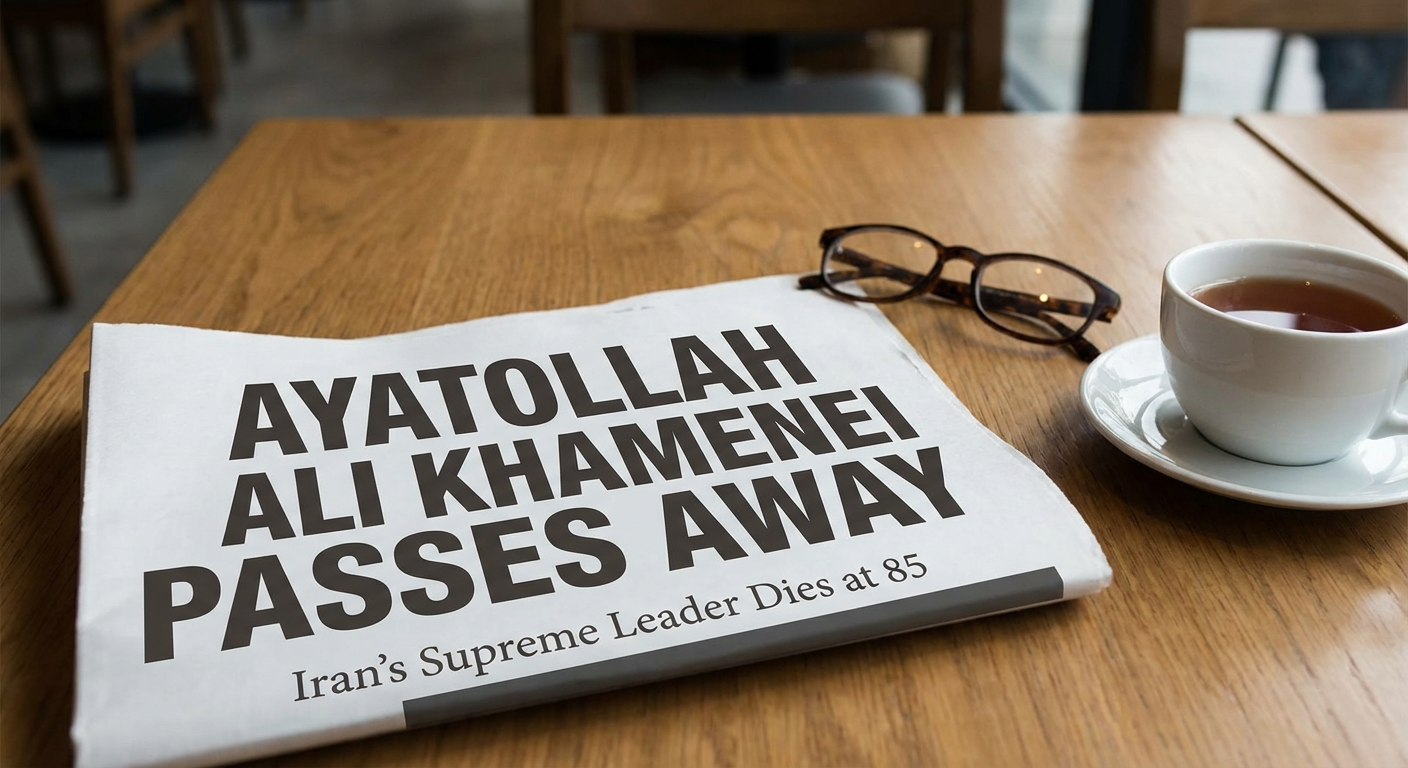
As the longest-serving head of state in the Middle East, Ayatollah Ali Khamenei has occupied the pinnacle of Iran’s complex power structure since 1989. His tenure has defined the Islamic Republic’s modern identity, characterized by a steadfast “Look to the East” policy, defiance of Western hegemony, and the expansion of regional influence through the “Axis of Resistance.” However, as Khamenei enters his mid-80s, the discourse surrounding his health and eventual passing has shifted from whispered speculation to a central concern for global intelligence agencies and the Iranian populace alike. The death of Ali Khamenei will not merely be the end of a long political life; it will be a seismic event that tests the durability of the Islamic Republic’s foundational institutions.
The Constitutional Path to Succession
The transition of power in Iran is governed by a blend of democratic veneer and clerical oversight. Upon the death of the Supreme Leader, the Assembly of Experts—a body of 88 clerics—is constitutionally mandated to elect a successor. In the interim, a council consisting of the President, the Chief Justice, and one of the theologians from the Guardian Council oversees the state’s affairs.
However, the reality of Iranian politics suggests that the “election” will be less a deliberative debate and more a formalization of a decision reached behind closed doors by the country’s most powerful actors. The Islamic Revolutionary Guard Corps (IRGC), which has evolved from a military branch into a sprawling economic and political conglomerate, will play a decisive role. Any candidate chosen must possess not only religious credentials but also the stamp of approval from the military elite.
Potential Successors and Internal Rivalries
For years, the names of potential successors have fluctuated based on the shifting sands of internal politics. Previously, Ebrahim Raisi, the late president, was considered a frontrunner due to his unwavering loyalty to the establishment and his judicial background. His untimely death in a helicopter crash in 2024 significantly narrowed the field, leaving a vacuum that has intensified the spotlight on Mojtaba Khamenei, the Supreme Leader’s second son.
While the notion of hereditary rule is theoretically antithetical to the principles of the 1979 Revolution, Mojtaba’s influence within the security apparatus and the office of the Supreme Leader (the Beit-e Rahbari) makes him a formidable contender. Critics argue that appointing a son would undermine the Islamic Republic’s legitimacy, potentially sparking internal dissent among high-ranking clerics who value the meritocratic—albeit restricted—nature of the office. Other potential candidates include figures from the Assembly of Experts, though none currently possess the singular gravitas or broad institutional support that Khamenei has cultivated over three decades.
The Role of the IRGC
If the Supreme Leader’s death occurs during a period of civil unrest or heightened international tension, the IRGC may move to consolidate power. There is a growing school of thought that Iran could transition toward a more overtly militarized state, where the religious leadership serves as a symbolic figurehead while the IRGC dictates foreign and economic policy.
The IRGC’s primary interest is the preservation of the system (Nezam) that allows them to maintain their vast financial interests and regional proxy networks. Any succession process that threatens this stability is likely to be met with swift intervention. Consequently, the death of Khamenei might trigger a “closing of the ranks,” where the state prioritizes security and continuity over any semblance of reform or liberalization.
Social Implications and Public Sentiment
For a significant portion of the Iranian population, particularly the youth, the death of Ali Khamenei represents an uncertain crossroad. The “Woman, Life, Freedom” movement and various waves of economic protests have demonstrated a deep-seated disillusionment with the clerical establishment. To the opposition, the transition period is viewed as a moment of vulnerability for the regime—a window where the cracks in the leadership might allow for renewed calls for fundamental change.
Conversely, the state is well aware of this vulnerability. Historically, the death of a revolutionary leader is met with a massive state-sponsored display of mourning and a temporary surge in nationalist fervor. The regime will likely utilize the funeral as a mechanism to demonstrate mass mobilization and legitimacy, attempting to signal to both domestic critics and foreign adversaries that the Islamic Republic remains unified.
Geopolitical Consequences and the “Axis of Resistance”
The international community, particularly the United States, Israel, and Saudi Arabia, will be watching the transition with high stakes. Khamenei has been the ultimate architect of Iran’s regional strategy, maintaining a delicate balance between provocative brinkmanship and strategic patience. His successor will inherit a complex web of alliances, from Hezbollah in Lebanon to the Houthis in Yemen.
A hardline successor may double down on regional expansionism to prove their revolutionary credentials. Alternatively, a leadership bogged down by internal power struggles might temporarily pull back, creating a strategic vacuum in the Middle East. Furthermore, the fate of the Joint Comprehensive Plan of Action (JCPOA) and Iran’s nuclear trajectory are inextricably linked to the Supreme Leader’s vision. While the broad strokes of Iran’s foreign policy are unlikely to change overnight, the personality and temperament of the new Leader will dictate the tone of future diplomacy.
The Economic Horizon
Iran’s economy, stifled by decades of sanctions and internal mismanagement, is another critical variable. Khamenei has championed the “Economy of Resistance,” an autarkic model focused on self-reliance. His passing could provide an opening for pragmatic factions within the government to argue for a shift toward re-engagement with the West to alleviate economic pressure. However, if the transition results in a more radical or military-led government, the prospect of sanctions relief remains dim, potentially leading to further inflation and social volatility.
Conclusion: A Turning Point for the Islamic Republic
The eventual death of Ayatollah Ali Khamenei will mark the definitive end of the “second generation” of the Islamic Revolution. Having outlasted his predecessors and survived numerous domestic and international crises, Khamenei’s absence will leave a void that no single figure may be able to fill with the same level of absolute authority.
Whether the transition is a seamless transfer of power or a catalyst for internal fragmentation depends on the ability of the IRGC and the clerical elite to maintain a unified front. For the world, it is a moment that will redefine the Middle East’s security landscape. For the people of Iran, it is a period of both profound anxiety and quiet hope, as the nation contemplates a future without the only leader many of its citizens have ever known. The stability of the post-Khamenei era will ultimately be the true test of the system he spent a lifetime building.
