

From Bikini to Facekini: A Surprising Journey Through Fashion, Culture, and Identity
The beach has always been more than a place to swim. It is a stage where culture, identity, rebellion, and beauty standards collide under the sun. Few fashion items tell this story better than the dramatic evolution from the bikini to the facekini. At first glance, these two garments may seem worlds apart. One celebrates exposure, confidence, and freedom, while the other emphasizes coverage, protection, and anonymity. Yet both are deeply connected by society’s changing relationship with the body, fashion, and self-expression.
The bikini burst onto the fashion scene in 1946 like a cultural explosion. Designed by French engineer Louis Réard, it was named after the Bikini Atoll, where nuclear tests were taking place, because he believed the design would create an equally powerful shockwave. And it did. The tiny two-piece swimsuit challenged conservative norms and redefined women’s fashion. At a time when modesty ruled public spaces, the bikini was bold, controversial, and revolutionary. It became a symbol of liberation, especially during the women’s empowerment movements of the 1960s and 1970s. Wearing a bikini was not just about fashion. It was about reclaiming ownership of the body.
As decades passed, the bikini evolved from scandalous to mainstream. Hollywood icons like Brigitte Bardot, Ursula Andress, and later Pamela Anderson transformed it into a symbol of glamour and confidence. Beaches became runways, and swimwear trends reflected broader social changes. High-waisted cuts, string bikinis, monokinis, and athletic designs each marked different moments in fashion history. The bikini’s popularity showed how society increasingly embraced body visibility, self-expression, and personal style. It became less about shock and more about individuality.
Yet fashion never moves in just one direction. While Western beachwear often leaned toward revealing more skin, other parts of the world developed trends shaped by entirely different cultural priorities. Enter the facekini, one of the most unexpected beachwear innovations of the 21st century.
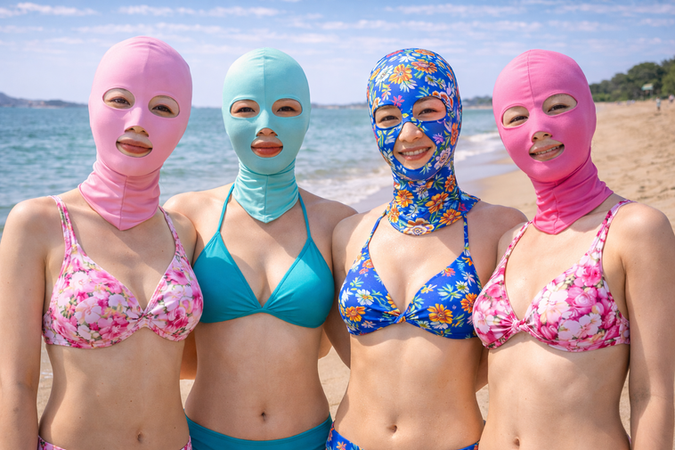
Originating in China around 2004, the facekini was created not for modesty in the traditional sense, but for practical reasons. Chinese beauty standards have long associated pale skin with elegance and social status. Unlike tanning culture in many Western countries, where bronzed skin often symbolizes leisure and attractiveness, many East Asian cultures value skin preservation and sun avoidance. The facekini, a full-face mask designed to block UV rays while swimming, quickly became a practical accessory for beachgoers seeking sun protection.
At first, global audiences reacted with confusion or amusement. Brightly colored, patterned, and sometimes resembling superhero masks, facekinis looked unconventional compared to traditional Western swimwear. But beneath the unusual appearance was a practical purpose. Rising concerns over skin cancer, sun damage, and premature aging made the facekini more than a fashion oddity. It became a functional statement about health and beauty.
The contrast between bikini and facekini reveals something fascinating about global beauty standards. In many Western societies, sun-kissed skin is often associated with health, vacation, and vitality. Tanning products, beach holidays, and outdoor lifestyles reinforce this ideal. In contrast, many Asian beauty markets prioritize whitening products, UV-blocking accessories, and skin preservation. Neither is inherently right or wrong. They simply reflect different cultural narratives about status, health, and beauty.
What makes this evolution even more interesting is how both garments empower their wearers in different ways. The bikini can represent confidence, body positivity, and freedom from restrictive norms. The facekini can symbolize autonomy, health awareness, and resistance to external beauty pressures. Both challenge assumptions. One asks why women should cover up, while the other asks why exposure should always be the default.
Fashion often mirrors deeper societal concerns, and modern swimwear is no exception. Climate change, increased UV awareness, and growing conversations around skin health have influenced global beachwear trends. Rash guards, full-body swimsuits, and UV-protective fabrics are now common even in markets that once prioritized minimalism. In this sense, the facekini may not be as extreme as it first appears. It could simply be ahead of its time.
Social media has also played a major role in reshaping how these trends are perceived. Platforms like Instagram and TikTok have transformed niche fashion items into global conversations overnight. What once may have been dismissed as strange can quickly become stylish, ironic, or even aspirational. The facekini, much like the bikini decades earlier, challenges people to reconsider what beachwear can mean.
There is also a powerful commercial side to this transformation. The global swimwear market has expanded beyond aesthetics into lifestyle branding. Consumers now look for versatility, sustainability, and health-conscious options. Eco-friendly fabrics, inclusive sizing, and multifunctional designs are reshaping the industry. Swimwear is no longer just about looking good. It is about aligning fashion with values.
The journey from bikini to facekini also highlights the growing complexity of female empowerment. Earlier generations often fought for the right to reveal more. Today, empowerment increasingly includes the freedom to choose coverage without judgment. True liberation may not lie in wearing less or more, but in having the agency to decide.
This shift reflects broader conversations about feminism and autonomy. For some, a bikini remains a proud symbol of confidence and progress. For others, protective swimwear like the facekini offers comfort, security, and personal choice. The beauty of modern fashion is that it can hold both truths at once.
Beachwear, in the end, is not really about fabric. It is about identity. It reflects how societies define beauty, how industries market ideals, and how individuals navigate personal comfort in public spaces. The bikini and facekini may seem like opposites, but they are chapters in the same story — humanity’s evolving dialogue with the body.
From the daring beaches of postwar Europe to the sun-conscious shores of Qingdao, swimwear continues to evolve alongside cultural values. What was once shocking becomes normal. What seems strange today may become tomorrow’s essential trend. Fashion is never static because society is never static.
So whether someone chooses a string bikini, a retro one-piece, or a colorful facekini, the real statement lies not in the garment itself but in the freedom of that choice. And perhaps that is the most stylish evolution of all.
