

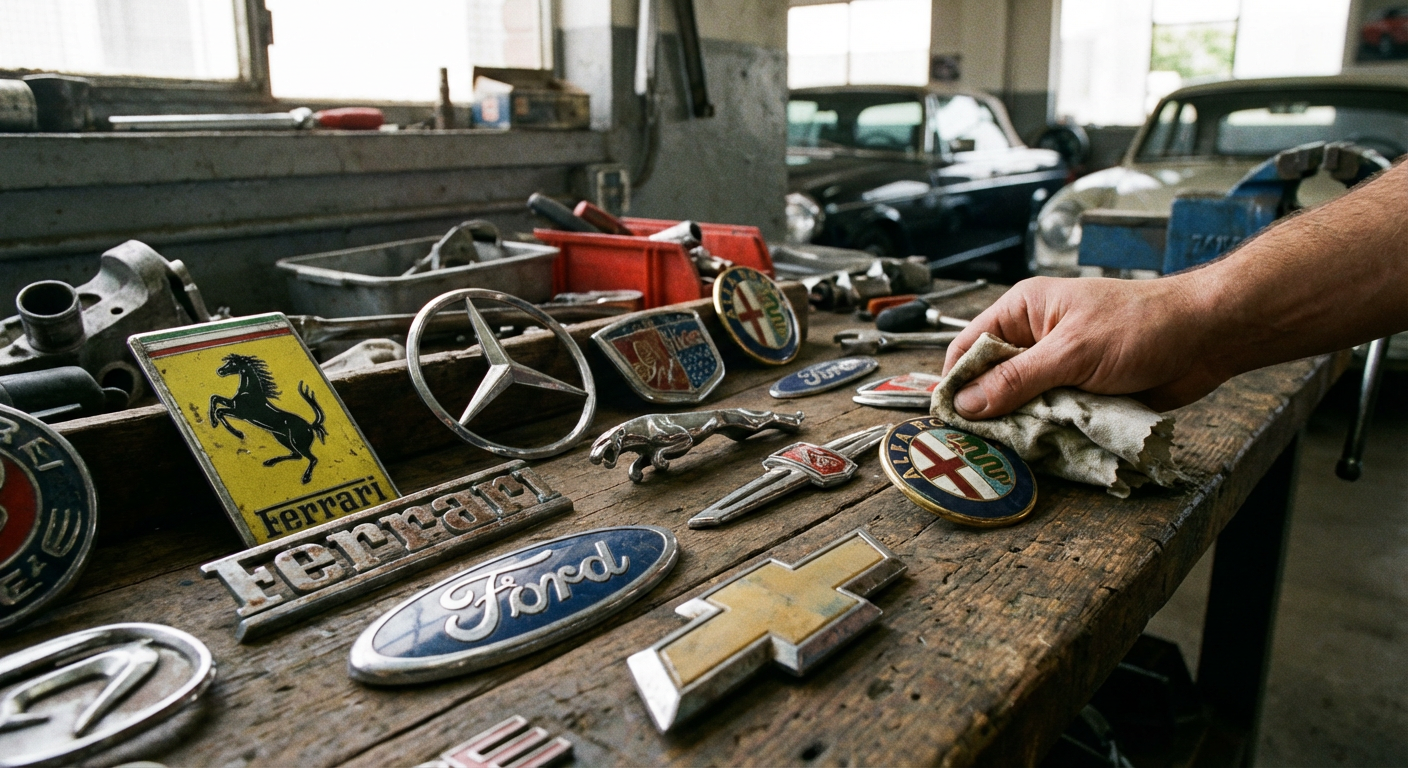
Car emblems are far more than decorative ornaments or identification badges; they are the distilled essence of a brand’s heritage, philosophy, and engineering prowess. For over a century, these small pieces of metal, enamel, and plastic have served as symbols of status, reliability, and speed. To the casual observer, a car logo is a simple identifier, but to the enthusiast, it is a window into the history of industrial design and the ambitions of the pioneers who built the automotive world.
The Heraldry of the Road: Why Emblems Matter
The tradition of car emblems finds its roots in medieval heraldry. Much like a knight’s coat of arms, a car badge identifies the “house” or manufacturer of the vehicle. In the early 20th century, as hundreds of small manufacturers vied for dominance, a distinctive emblem was essential for brand recognition. These symbols had to be legible at a distance and capable of conveying a sense of quality and durability.
Today, emblems have evolved into global icons. They represent a promise of performance and a lifestyle choice. Whether it is the sleek minimalism of a modern electric vehicle brand or the ornate complexity of a classic luxury manufacturer, every line and curve in an emblem is intentional.
The Stories Behind the Symbols
1. The Prancing Horse: Ferrari
Perhaps the most famous emblem in the world, Ferrari’s Cavallino Rampante (Prancing Horse) has a somber and heroic origin. The black horse was originally painted on the fuselage of Francesco Baracca’s fighter plane during World War I. After Baracca’s death, his parents suggested to Enzo Ferrari that he use the symbol on his cars for good luck. Enzo placed the horse against a canary yellow background—the color of his hometown, Modena—and added the Italian tricolor at the top.
2. The Three-Pointed Star: Mercedes-Benz
The Mercedes-Benz star represents the brand’s ambition for universal motorization. Each point of the star signifies a different domain: land, sea, and air. Gottlieb Daimler, one of the company’s founders, originally used a star to mark his house on a postcard, telling his wife that one day this star would shine over his factories. Today, it remains a global benchmark for luxury and engineering excellence.
3. The Propeller Myth: BMW
For decades, many believed the BMW roundel represented a spinning propeller against a blue sky, reflecting the company’s history as an aircraft engine manufacturer. However, the truth is slightly more grounded. The blue and white quadrants represent the official colors of the State of Bavaria, but arranged in reverse order to comply with local trademark laws that prohibited the use of state symbols in commercial logos.
The Evolution of Design: From Ornate to Minimalist
The design language of car emblems has undergone a massive transformation. In the “Golden Age” of motoring, emblems were often three-dimensional hood ornaments. These “mascots” were intricate sculptures, such as the “Spirit of Ecstasy” (Rolls-Royce) or the “Leaper” (Jaguar). However, safety regulations and aerodynamic concerns eventually moved these designs from the top of the hood to flat badges on the grille or trunk.
In the digital age, we are seeing a shift toward “flat design.” Brands like Volkswagen, Nissan, and Kia have recently redesigned their emblems, removing 3D gradients and chrome effects in favor of simple, two-dimensional lines. This change ensures that the logos are easily readable on smartphone screens and digital interfaces, reflecting the shift toward electric and software-driven vehicles.
Hidden Meanings and Easter Eggs
Many car emblems contain subtle details that the average person might miss.
- Toyota: The three overlapping ovals in the Toyota logo actually represent the heart of the customer, the heart of the product, and the ever-expanding technological advancement of the brand. Furthermore, if you look closely, you can spell out every letter of “TOYOTA” using the lines within the emblem.
- Alfa Romeo: This emblem features a red cross (the symbol of Milan) and a Biscione—a giant man-eating snake. The snake is the symbol of the Visconti family, who ruled Milan in the 14th century.
- Subaru: The name “Subaru” is the Japanese name for the Pleiades star cluster. The six stars in the logo represent the five companies that merged to form Fuji Heavy Industries, with the large sixth star representing the unified parent company.
The Psychology of Branding
Manufacturers spend millions of dollars researching the psychological impact of their emblems. Circular logos, like those of Mercedes-Benz, BMW, and Audi, tend to project a sense of community, endurance, and perfection. In contrast, angular logos like the Lamborghini shield or the Chevrolet bowtie suggest strength, stability, and aggressiveness.
Color also plays a vital role. Red (seen in Honda’s Type R or Mitsubishi) evokes passion and speed. Silver and chrome suggest high-tech precision and sophistication. Blue is often used by brands that want to emphasize reliability and, more recently, environmental friendliness (as seen in Toyota’s hybrid badges).
Collecting and Restoration: The Aftermarket Scene
Car emblems have become highly collectible items. “Automobilia” enthusiasts often pay thousands of dollars for rare, vintage hood ornaments or original enamel badges from defunct manufacturers like Packard or Duesenberg.
In the world of car customization, “de-badging” has become a popular trend. This involves removing the emblems from a vehicle to create a cleaner, more mysterious aesthetic. Conversely, many owners choose to upgrade their emblems to carbon fiber or “blackout” versions to give their cars a more modern, aggressive look.
The Future of the Emblem
As we transition into the era of autonomous and electric vehicles, the emblem is changing once again. Many new EVs feature illuminated logos. Since electric cars do not require traditional cooling grilles, the front of the car has become a blank canvas for light-based branding. A glowing emblem serves as a “digital signature,” identifying the car in the dark and signaling its high-tech nature.
Despite these changes, the core purpose of the car emblem remains the same. It is a mark of pride for the manufacturer and a badge of identity for the driver. Whether it is a legacy brand with a century of history or a new electric startup looking to make its mark, the emblem will always be the crown jewel of the automobile.
Conclusion
Car emblems are the punctuation marks of automotive history. They tell stories of wartime heroism, regional pride, and technical breakthroughs. From the fierce bull of Lamborghini to the minimalist “T” of Tesla, these symbols define our relationship with the machines we drive. The next time you walk past a parked car, take a closer look at the badge on its hood; you aren’t just looking at a logo, but at a century of human ambition and design.
